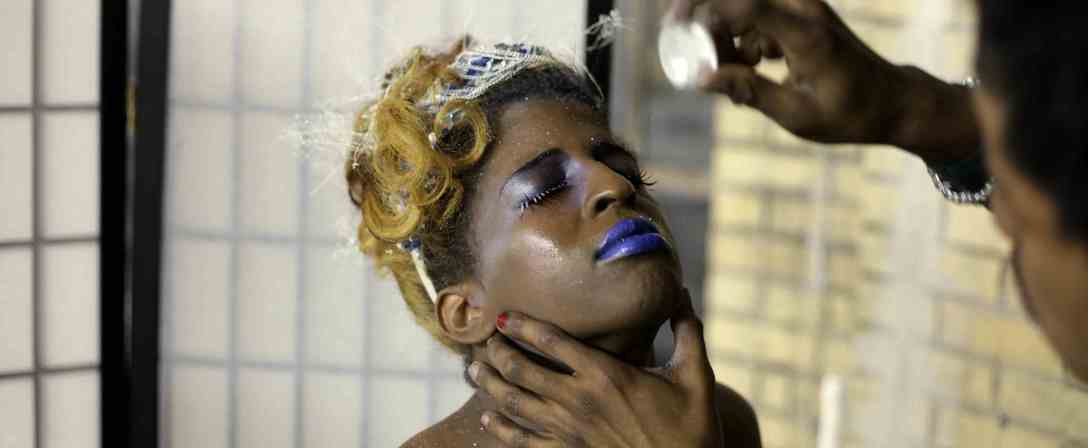
Directed by Elegance Bratton
Of those experiencing homelessness in the U.S., about half are LGBTQ+, and overrepresented among those homeless are people of color. In the wake of Stonewall, Elegance Bratton posits as the first frame of Pier Kids, white queers were let into society, while queer people of color remain on the margins, uncared for and unseen.
With Pier Kids, Bratton wants to undo it. A point-and-shoot documentary format puts the unhoused LGBTQ+ community in New York City front and center, and its members testify to a struggle both shared and personal: living on the street, harassment from cops, the ignorance of the average American, the tough and conflicted relationship with their families, and the all-too-often necessity of sex work to make ends meet as a taboo pleasure clearly wanted but vilified.
But: it’s also a document of the makeshift families and communities that are created in this societal void. From the tight-knit “parent-child” connections, to the more nebulous, but nonetheless present sense of community that arises among those who share the experience of being left behind.
The testimony ranges. You’ll hear of a broken bureaucratic system, where a person tells of how their life would be easier if they contracted HIV, so they could receive public services and be housed. Ludicrous in how awful it is. You’ll also be treated to a finance bro ignoramus who peels in to say some nonsense, only Bratton lets him run his mouth before cutting abruptly as if to say “see!?”
There’s a dichotomy here. A granting of a platform, shining a light on an issue, and a finger, pointing with barely contained ire, trying to settle a score.
Thankfully Pier Kids is mostly the former, and this documentary has both access and the insight to paint a picture of a vast way of life discarded unduly. Bratton is upset, justifiably so, and the consternation of Pier Kids’ opening frame never leaves for the duration. This initial anger mellows into a focus on how some its subjects make it out of dire straits, and it’s where its most powerful moments lie.
Like when a trans woman shares a couch with a mother who insists she’ll always see her child as their birth gender, but the daughter nonetheless gets this moment to speak their truth. Or when there’s a dust-up among makeshift family members, and Bratton shows us the raw side to a life where everyone’s personhood is under siege.
These moments are rare, however, and for the most part Pier Kids resigns itself to providing a stage to those it feels are left behind and documenting their existence. It does so with access, and an insistent compassion, but leaves interrogation behind. It’s of the moment, but doesn’t pry.
Bratton goes wide instead of deep, so there’s no intense character study, even among the subjects he follows out of New York and to where they’re from. Looking to fill the lack it’s identified, Pier Kids is an entry-level overview of plights well-established, but ultimately meant for an unknowing populace whose ignorance is likely because they prefer it that way. Are they going to watch?
They’d do well to do so. Bratton’s documentary is a frank, unvarnished look at a forgotten subculture that doesn’t give in to gloom, offering instead a compassionate hand, a watchful presence, and a chance for its subjects to say their piece without judgment.
 Mikkel Frederiksen