Directed by Andrzej Żuławski. Written by Frederic Tuten and Andrzej Żuławski
Andrzej Żuławski’s Possession, the horror story of a couple’s unraveling relationship, is like a slippery set of stairs. It never lets you get a foothold, and it almost immediately has you trapped in a wild descent where Żuławski mixes moods and genres, eliciting laughs and gasps with the sleight of hand of a master magician.
It’s as silly as it is horrifying, this uncanny mix of body horror, psychological torment and screwball comedy, and as Żuławski deftly switches modes, the groundswell builds beneath your feet until Possession swallows everything up in its madness. It’s brave and ambitious work to this day as a unit, and full of indelible moments.
Sam Neill is Mark, a spy living in West Berlin who returns home after a long assignment. He finds his home split. His wife Anna (Isabelle Adjani) is distant and elusive, and he suspects there’s another man. He immediately breaks, feelings of emasculation and frustrated unknowing hitting him like a sledgehammer. Anna, his wife, flees him, but she’s tormented in her own way, and these feelings run deeper. The guilt heaped upon women as partners, mothers and, honestly, just as women, provides a much richer net of conflicted feelings for her to get wrapped up in.
Żuławski’s treatment of both their feelings is Possession’s genius. Instead of working through it like some bloodless marriage counselor, Żuławski builds a metaphysical hall of mirrors where these feelings are wrung out and manifest into horrific visions for both Mark and Anna to endure. Prepare for screaming caused by pain both physical and emotional, and puzzlement on your side as to what’s real and what’s not.
The behavior of both is wild and over-the-top, and a modern-day audience accustomed to subdued grumbling and silent suffering when it comes to life’s big emotions will likely balk at Mark and Anna’s reaction to what’s happening to their life and between them. But Żuławski takes big swings in this regard, opting for a more visceral treatment of feelings anyone would hate to endure and making an attempt at giving voice to feelings unspeakable.
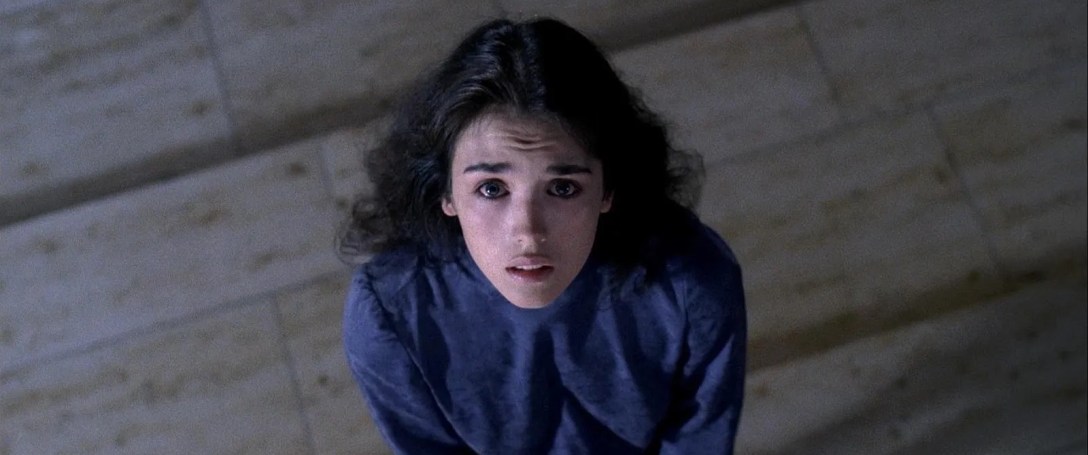
Isabelle Adjani delivers a performance for the ages as Anna, going all out whether it’s suffering a complete nervous breakdown or breaking up inside as the pressure builds. Every moment is intense and frightening when she’s on screen, her unpredictability a live wire that runs through Possession. No one should behave like Anna does, but Adjani sells the position that no one should endure what Anna’s going through either, the combined weight of a ruined relationship, family, and crushing shame of feeling unable to perform the behaviors society expects of her.
Around Neill and Adjani, Żuławski’s camera is very much alive and discomforting, twirling around them and closing in way past what’s reasonable. It’s evocative filmmaking that makes you well aware of its presence. You’re in for the ride too, as you never get enough distance to observe Mark and Anna, and you’re left to just try to keep your distance. It’s not subtle filmmaking, but it’s effective, grabbing you by the scruff in comparison to many movies who are fine with gently trying to lead your eyes.
This involved level of filmmaking makes Possession a crazy ride that’s impossible to sum up and solve. What it is, is an experience rich in both sense and nonsense where Żuławski has created something akin to a pit of snakes, a heaving mass wherein ideas writhe around each other until there’s no clear lines of distinction, but you know for a fact it’s unsettling.
 Mikkel Frederiksen