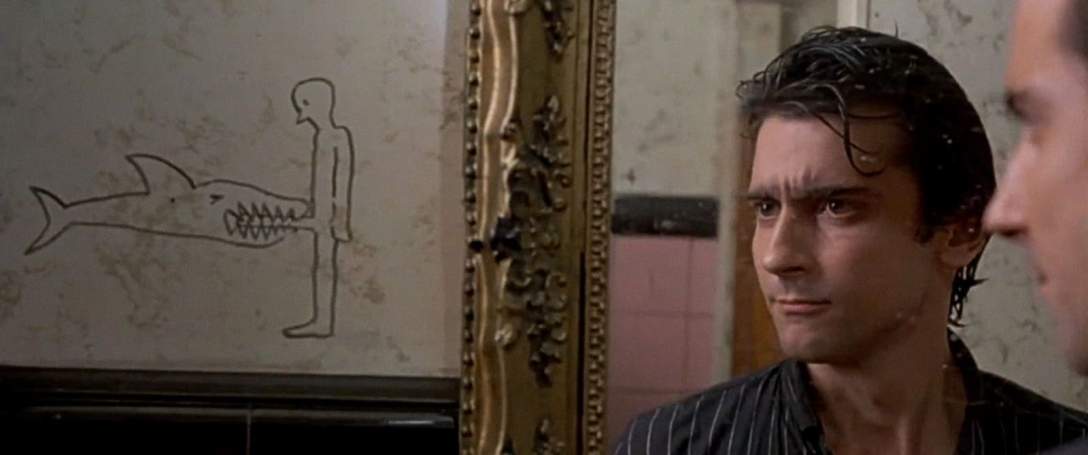
Directed by Martin Scorsese. Written by Joseph Minion
After Hours, Martin Scorsese’s story about a desk jockey whose desperate want for a little excitement sends him reeling through SoHo over the course of one night, is a cautionary tale.
Because this desk jockey, named Paul Hackett and played by Griffin Dunne, is all of us, and by us, I mean the average person living the average life. He’s every office worker who knows today will be tomorrow and will be the day after that. His story is for everyone who comes home to a neat small apartment wearing neat clothes living a neat life, but longs for a tear in the rote facade. Life on the shelf.
Paul’s bored and yearning. He sits at work hunched over a computer surrounded by others that do the same. He lives alone. One night, he sits in a diner reading Tropic of Cancer, a story about a man its writer described to be in the grip of delirium. Paul’s delirious in his own milquetoast way. A girl strikes up a conversation about the book. She’s giddy and buoyant. She’s game. Paul’s immediately hooked, so when she suggests he come down to her SoHo loft later, Paul’s game too.
Another head should have prevailed, because a long night on earth follows for Paul, replete with death, lynch mobs, overflowing toilets, creatures of the night, and the agony of being inches away from salvation without the gap ever closing as he struggles to get back uptown.
After Hours is a rambunctious ride-along with a hapless driver into a country he doesn’t belong. The nightlife past our cozy bedtime, the alternative lifestyle so foreign to his own experience, the time of night where the world transforms. Different rules apply when it’s this late, says a diner manager, and he’s right. Scorsese and Minion make it so by creating a microcosm within New York City wherein Paul’s trapped. As far-flung his misadventures are, they somehow connect, and as he might, there’s no outrunning it, like he’s stuck on some hamster wheel along with his pests.
Scorsese needs you to feel Paul’s stress too, and he manages, and only the levity inherent in the mishaps keeps After Hours from becoming a nightmare thriller. Paul’s ungainly charisma, the physical comedy his encounters provoke, and the hilarious surreal combine for a chuckle at Paul’s expense.
It’s a disarmingly simple movie that needs to really execute on its premise, because otherwise it feels hollow. Paul’s motivation, predicament, and resolution is clear from about 20 minutes in, and so what’s left are 70 minutes where Scorsese must keep upping the stakes. The pacing required is daunting but he’s equal to it, and so on we get on this stepladder of errors. Even if it’s overly silly, you’re still tagging along because Paul’s impetus flows in us all.
As funny as Paul’s night is, you also try to contain yourself a little, because there’s a bit of his yearning in us, too. We’re not immune to what drew him in. The wish for excitement, the novel, the intimidating allure of the new and strange. His is a cautionary tale we secretly fear, blown enough out of proportion for us to distance ourselves from. Fun and fearful.
 Mikkel Frederiksen