Written and directed by Pedro Costa
Colossal Youth, a movie about displaced and left behind immigrants in Portugal, occupies the liminal space between documentary and fiction filmmaking. It features real people, telling real stories, but the framework is made up, as a man haunts the Fountainhas neighborhood in Lisbon, visiting homes and providing an ear to people who have something to say.
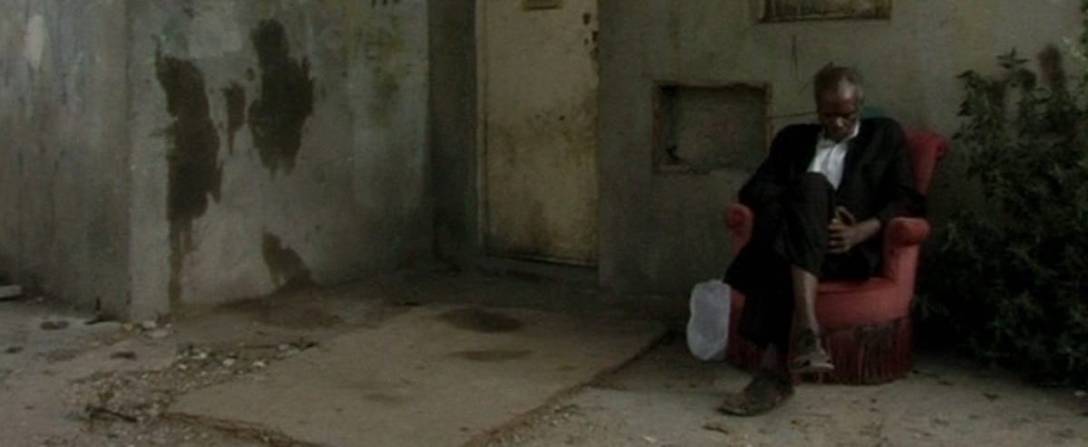
What Colossal Youth has to say to us, whether it says anything at all, is likely a matter of debate. It features long static shots that often feel like they go nowhere, an omnipresent silence, and monologues instead of conversation. Its actors, mostly nonprofessional, are instructed to deliver their lines not like any natural person would, but as elevated declarations usually found on stage, only here it’s closer to a lethargic droning. The characters of Colossal Youth are not subdued, they are submerged.
What are they submerged in? A film about the fallout of the Carnation Revolution for Cape Verdean immigrants, they’re stuck in limbo, stuck with the hardships of the past, which for many are still ongoing, and stuck with a grim, impoverished outlook. Some still reside in rundown slums, while others are being moved into social housing after many years of waiting. These new apartments are no refuge, their white walls and empty rooms almost alien compared to the somber, cave-like rooms some still occupy.
The book on European colonial history will never cease to be written, and the history of those colonized by Portugal is not household knowledge, especially not these days. Colossal Youth becomes foggy territory because of it, even if it doesn’t speak to these things directly. Instead, it speaks of drug abuse, illness, fear for children’s futures, and through a person’s inability to remember the lines of a love poem meant for a sweetheart back in Cape Verde, the disconnection felt by immigrants from their motherland.
On paper, there’s great drama there. Traumatic matters of the heart and soul. You would expect angry confrontations, heat, tearful lamentations, but Costa’s style casts it all into deep fog. The languid takes, slow exchanges, out-of-place formality – life seems to happen deep beneath the surface of Colossal Youth, if it happens at all. A sense of defeat hangs, turning everything spectral.
That makes Colossal Youth high art CCTV at times, making you question what you’re really watching. Scenes can be filled with a person talking at length, losing track of what they were saying before weaving back, calling to mind visits to aging distant family members, doddering in their own reality while you wish more than anything you could leave.
Our guide in all of this is Ventura, the man who roams from place to place to place and back again. Saying very little, often repeating himself, and then sometimes ceding conversation altogether. At times, Costa does have a sense of humor, but it’s so dry it only comes off in flecks in precious few scenes, so it doesn’t provide relief in the already arid air.
It makes for a frustrating watch because you’re not sure what to make of this movie that’s almost disinterested in telling you anything, or at the very least, disinterested in helping you understand or even making you care. There’s a very muted presentation of a haunted existence, but Costa’s presentation of the slums of Fountainhas and its characters is too deliberate to not have a purpose behind it.
It almost becomes a matter of extremes. Either you’ll cut Colossal Youth dead, far too uninvested in this drawn-out sigh of a movie to stick with it for its runtime, or you’ll find something transcendent borne from this singular mode of expression, the spectral nooks and crannies intriguing in their reticence and compelling in what may slowly emerge in time. Landing in between is certainly the worst place to be.
 Mikkel Frederiksen