Directed by Charles Vidor. Written by Marion Parsonnet
Rita Hayworth shines her light on Gilda, the story of a power struggle set in the gambling halls of Buenos Aires. In real life, it’s an unfair fight, but not so in Vidor’s fiction, which is all the more puzzling.
Glenn Ford plays Johnny Farrell, a two-bit gambling hustler who’s taken in by a casino owner by the name of Ballin Mundson (George Macready). Why? It’s not entirely clear, but it makes a man out of Johnny, who soon has money, prestige and power. The two men live by one rule: women and gambling don’t mix, so it’s quite the surprise for Johnny when Mundson returns from a short trip out of town with a wife on his arm by the name of Gilda.
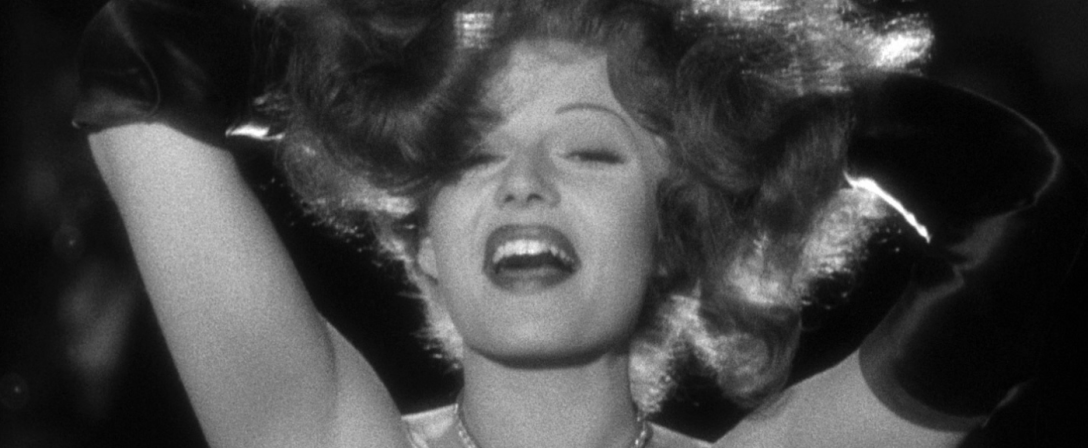
Gilda Mundson is the hottest person to ever go by that name. In the guise of Rita Hayworth, her smile powers cities, her lush hair can carry conversation, and one questioning raise of her eyebrow makes men pant like dogs.
Gilda’s a justified exception if Mundson was to break his rule for someone, but why is the air between Johnny and Gilda so charged, so filthy with insinuation? Do they have a past? With this thinly veiled tension, do they have a future?
Gilda is a game of cat-and-dog that sizzles with Hayworth’s performance as a shameless provocateur and Glenn Ford as the man that has to try to keep up with her. He doesn’t quite manage, but who could? Hayworth’s a genuine star here, possessing not only beauty but the self-awareness and poise that electrifies some of the barbed comments that Parsonnet’s script is dense with.
It’s why Gilda is also slightly confounding, because for the back-and-forth between Gilda and Johnny to work, you also have to see them as equals, and that’s not the case here. It’s perhaps Gilda’s bleakest element, how someone so sharp and charismatic is forced to contend with odd, lesser men within this world. It’s a bleak commentary on the real world too, seeing how studio executives could see this dynamic unfurl and not find it laughable.
That’s the hollow heart of Vidor’s movie, this at times lacklustre script that doesn’t quite convince you of its twists and turns. Johnny and Mundson’s relationship is curious, the business venture that underpins Mundson’s operations isn’t the gripping caper it wants to be, and frankly, any minute not spent watching Hayworth work is wasted.
By naming the entire movie after her character, the filmmakers knew what they had on their hands, but they clearly didn’t know it enough. Hayworth’s performance makes Gilda worth watching, and it’s a testament to her alone that this movie is remembered when its other parts are merely the breadsticks that come before the meal Hayworth serves you.
 Mikkel Frederiksen