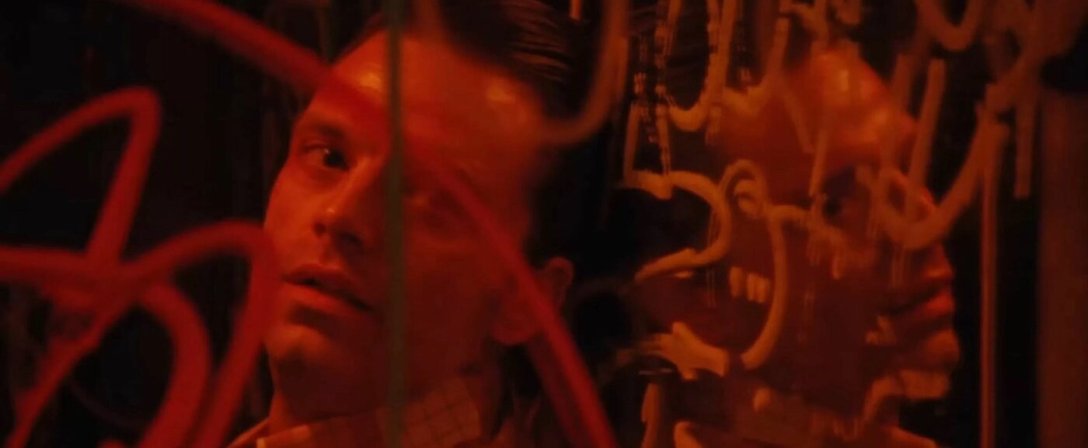
Written and directed by Aaron Schimberg
Edward’s a struggling actor in New York City, struggling with himself, and living in an apartment struggling not to fall apart. A facial deformity caused by an illness has him shy of life, knowing the emphasis and scrutiny we place on looks. Like most people, he’s dead-scared of rejection, rebuffing himself before anyone else has a chance to.
Then a miracle cure makes him conventionally handsome. He switches to selling real estate, beds women, dresses like he’s in GQ, changes his name and leaves behind the few people that did know him from before, including his crush, a playwright neighbour. Later, he learns she’s putting on a play where his old self is the main character, and he can’t help but audition. Here, he comes into contact with someone who has the same illness he did, but none of the self-imposed struggle. Identity crisis ensues.
Aaron Schimberg’s A Different Man is a deep-fried take on the saying the only thing stopping you is yourself. The idea that our lives would be different if we could just rid ourselves of the things causing our self-consciousness, be they a misshapen nose, a limp, or anything-less-than-immaculate hair, is the foundation of a billion-dollar self-improvement industry that sells everything from painful cosmetic surgery to vapid self-help books. There is, and always will be, something.
Edward’s illness is rare, but his anxieties are common. Schimberg turns it into a mad devolution, as Edward’s misadventure is a loud crash down a staircase: it only goes one way but it’s a spectacular descent all the same, waving arms, thumbs, surprising contortions and a phew-inducing conclusion.
Along the way the movie is mercurial in its deft mix of dark comedy, gruelling anxiety, and aggressive violence, dragging you behind it the entire time, exhilarated and apprehensive of where it decides to turn next. Schimberg does have a destination in mind, and his treatise on our shallow society and how it makes us afraid to wade into 5-inch deep water is simple enough, but the treatment, this tap dancing mix of thriller, comedy, and drama is fresh and titillating.
It’s all defined by an erratic elegance that informs everything from the performances to Umberto Smerilli’s score, a composition at home in German Expressionism that teases the turmoil wrecking Edward and is broken up by screeching horror stings emphasizing the racked nerves of a man who fears every encounter with the outside world.
Sebastian Stan and Adam Pearson deliver a wonderful duet as Edward and Oswald. The corners of Stan’s mouth reach for the ground, inching closer as the movie moves along, and as a deeply insecure man, Stan appears wholly uncomfortable in his own skin, rigid for the most part until he dissolves in relief the moment he feels he can relax.
Alongside him, Adam Pearson is disarming and charming. As a slightly gawky, but endlessly affable, intruder into Edward’s life, Oswald lights up the room. With a vigorous body language he invites the whole world in, and the gleam in his eye means you don’t need telling twice. Both Stan and Pearson prove you act with so much more than your face.
Beyond the clear central thrust of A Different Man, there are commentaries on the exploitative nature of art and its reductionist approach to our rich inner tapestries (Renate Reinsve is a provocative acquaintance in this regard as as Ingrid, the ambitious writer-director), as well as a keen psychological exploration of identity; Schimberg weaves it all into this stressfully funny slinky that lurches forward with assured abandon.
Let yourself be, Aaron Schimberg says with A Different Man, only he won’t let you be. He puts the screws to you, and you squeal like a happy little pig, because all there is, is twisted pleasure.
 Mikkel Frederiksen