Directed by Nora Ephron. Written by David S. Ward, Jeff Arch, and Nora Ephron
There’s a lot to be nostalgic for when it comes to 90s rom-coms like Sleepless in Seattle, and that’s acknowledging a lot of it was never “real” in the sense that these stories don’t trade in reality, but try soothe our romantic angst and provide a comforting blanket to pull over our heads. What makes Seattle an enduring pleaser is the things it gets right about our underlying needs.
Connections that transcend society’s artificial boundaries. Finding common footing with friends, strangers, soon-to-be partners. Feeling seen, feeling held. Acknowledging the absurdity of rom-coms’ central premise but nurturing a hope that romance is attainable, god damn it. It’s all here, sugarcoated to be sure, but actually here, in Nora Ephron’s story about a widower who becomes the singular obsession of a newspaper reporter and hopeless romantic after the mom-less son calls into a radio show trying to set his father up.
Tom Hanks is the bereaved Sam Baldwin, still slumped over in grief 18 months after his wife’s passing. Hanks has a tough job here. He has to be endearing in his hardship, making plain his broken heart with eloquence, but not shed a tear, which might seem weepy. For Seattle to stay buoyant, any onlooker and radio listener’s perception of him has to land on “I can fix him” and not “charity case”. In a heartfelt exchange describing what his wife meant to him, Hanks nails it.
The impossibility of Hanks accurately portraying what the loss of your significant beloved other looks like does de-fang Seattle a bit, but it sets up the real fireworks of Ephron’s movie: Meg Ryan as Annie Reed, who, like every other woman in America, melts as she listens to Sam pour his heart out on the radio.
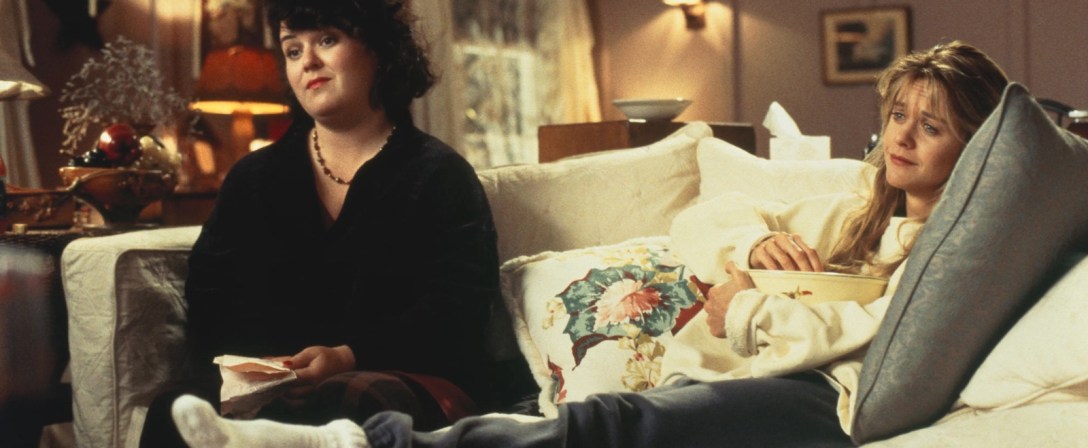
Annie’s weird! She loves An Affair To Remember, which is not weird, but she’s all over the place as a person, flying high on what she hopes for, but crashing against reality’s shortcomings. She’s every person who’s trying to convince themselves that true love, fire-in-your-heart love, doesn’t really exist and “good enough” is actually that. Before Sex and the City let women be a little neurotic about romance, Annie showed them how.
Ryan pours a lot of energy into Annie as a scatterbrained, giddy, but ultimately resolute romantic, and the sweetness and modesty of her desire means there’s not a single person who’ll root against her, despite her style of courtship is that of a stone cold stalker. She’s unpolished, relatable, methods side, and authentic.
Seattle is a great, heartwarming laugh because of Ryan and Hanks who lift the movie above its contrivances, many inherent in the genre, as well as the disturbing pursuit at its center that would be true crime podcast fodder were the genders reversed. Hanks, as versatile as they come, also has great chemistry with Ross Malinger as Sam’s son Jonah, who acts as Cupid once his patience with his mourning father runs out.
As most kids in movies for adults are, Malinger’s meddling son is a bit more precocious than your average child, but the exchanges between Sam and Jonah are the source of most of Seattle’s laughs, as they’re surprising in their candor and touching in their tenderness.
What makes Seattle a classic and exemplary of a genre we all lament has seen better days, pointing to movies exactly like this one as an example why? It’s not surprising, sophisticated, or sincere in its emotions, it’s not linchpinned with some iconic scenes. The bullseye it hits might just be an uncomfortable truth.
For millennia, women have unjustly had a few gender roles hoisted upon them, some more than others at times, but unfortunately most of them most of the time: they must attract and seduce men as alluring goddesses before becoming caretakers of the home and the family. They must be sexy, then nurturing, sometimes both, somehow, lingerie ready to go underneath the apron. In essence, they must be useful in some way shape or form for their partner, at all times, reduced to a human Swiss Army knife valued for their utilitarian purpose in a patriarchal society.
For all of Seattle’s silliness, its romance and what it gets right might just come down to Sam coming off as someone who didn’t ask that of his late wife. His affection and want endured past a point where his wife could no longer give him anything, suggesting that Ephron’s lesson is that what women want is a man who’ll love them for them, even after they’re dead.
 Mikkel Frederiksen
[…] Hanks and Meg Ryan reunite once again (they co-starred in Joe Versus The Volcano and Sleepless In Seattle) and you wish they’d kept working together, because their chemistry is what could launch a […]
LikeLike