Directed by Masahiro Shinoda. Written by Masaru Baba and Masahiro Shinoda
Under the hood of the expensive-looking sports car that is Masahiro Shinoda’s Pale Flower there’s an RC car battery struggling to move the machine forward. That’s a shame, because damn, it’s one fine thing to look at, something so cool standing still it almost distracts you from that fact.
Muraki is released from prison after serving a sentence for killing a rival gang member and this convicted murderer has a hard time relating to the common man, decrying their monotonous ways of working a 9-5 job and generally fitting into society’s prescribed ways.
In his dissatisfaction, he slides back into old habits of gambling, mostly losing, hanging with old acquaintances, the general yakuza routine. Then one night he finds Saeko playing at one of his usual haunts, and a fascination grows with this doe-eyed beauty whose appetite for risk and thrill is relentless. Despite the warning signs, Muraki falls under Saeko’s spell, a dangerous place to be as a gang war looms on the horizon.
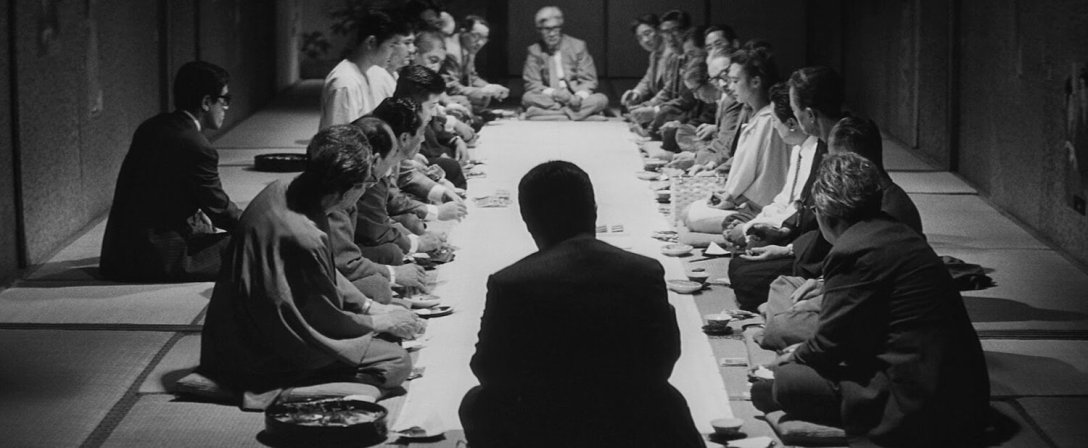
Pale Flower is about as beautiful a film as they come and stylish as hell. Black and white isn’t just a technical description, it’s an ethos here, as Masao Kosugi’s cinematography is so dramatic in its use of lighting that it turns Pale Flower into something greater, more mysterious, more powerful that it has any right to be. It makes icons of men, epic showdowns of people occupying opposing sets at a table, and common hallways appear full of intrigue.
Like someone with the wind in their hair and sunglasses on their face as they cruise along the beach at sunset, Pale Flower coasts along on its technical accomplishment, because its story is rather trifling, as it makes a plot featuring murder, murder attempts, yakuza gang wars seem almost lethargic.
A pivotal car chase scene, meant to show us Saeko’s lust for excitement and reckless abandon, is a Sunday drive, even by contemporary standards, but on foot Shinoda redeems himself, as a midnight knife fight in a quiet street does electrify with the director showing us how less is more.
As Muraki, Ryô Ikebe is a nail, completely composed even when the hits start coming, an insouciant attitude we later learn comes down to a general malaise. As cool as he might be, this listlessness doesn’t help a movie that struggles to get into gear, and similarly to how Muraki can’t find his way back to life, it’s hard to truly find your way into Pale Flower.
There’s no denying it’s one of the coolest things ever put on screen, but that’s unfortunately the overwhelming memory you’re left with along with Mariko Kaga’s work as Saeko, a nymph who carries a switchblade and whose eyes only light up when she’s watching something burn.
A faithful import of film noir, Shinoda includes the genre touchpoints of moody alleys and taciturn men who say their piece with violence and not much else, then does the visual component better than the Americans, so it’s a shame when the rest can’t live up to the fine work done by everyone working off-screen. A pale flower indeed.
 Mikkel Frederiksen