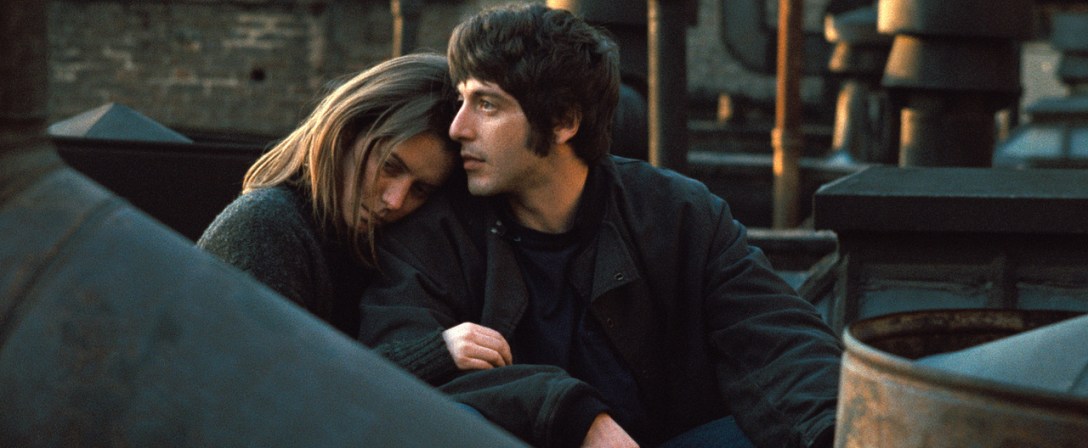
Directed by Jerry Schatzberg. Written by Joan Didion and John Gregory Dunne
With its two incredible leads, The Panic In Needle Park takes you inside heroin addicts’ ugly existence where everything falls away to leave only the next fix, as a couple drowns in their addiction and lets go of anything worthwhile in their life, including the love they have for each other.
Al Pacino stars as Bobby, bright-eyed petty thief whose fast mouth and promise of excitement put Helen, played by Kitty Winn, under his spell. Helen’s what we’d now call an introvert, a shy but kind person who seems more at ease on the arm of the life of the party rather than in the midst of it all. Even as the film goes underway, as she holds onto Bobby in the company of zoned-out addicts slumped on park benches, we understand how she missed the warning signs, having only eyes for Bobby.
We don’t blame her, because Pacino shows us how you can fall for a self-admitted heroin addict. Pacino already has mystery and magnetism to him, but his small frame, antics, and bouncy energy is equally disarming.
The intensity of Pacino, which will turn into a blustering volcano later in life, is perfect here as someone who woos Helen with a type of devotion and vulnerability that’s hard to not be taken in by. Add to that the sense of adventure he provides this meek girl, and she never stood a chance. Sometimes it’s as simple as finding someone who makes you laugh and makes you feel seen.
Pacino’s more than just an alluring lover, he’s also an excellent dope fiend. He moves like a fish in an aquarium, gliding along before twitching into action at the smallest ripple in the water, sniffing out the score he needs so bad. Bobby talks a lot, but how he moves tells you everything.
If The Panic In Needle Park was only 20 minutes long, you’d probably have teens posting pics of Wynn and Pacino on social media captioned with “If love ain’t like his, I don’t want it,” but fortunately it ain’t, and if Schatzberg’s movie tell us anything, it’s that life is long and some substances, be it love or drugs, truly can change it forever.
Because soon both Bobby and Helen are addicts, and their need for each other must take second place to heroin. The initial suggestion of companionship shifts to codependency, and any hope of these two going on unscathed evaporates, because The Panic In Needle Park takes a very thorough approach to depicting what drug addiction looks like: the paraphernalia, the down, the up, the death, the journey from supplier to blood vein, and everything in between.
It’s almost a PSA, and it feels radical in its detail and how it doesn’t sensationalize anything, telling you this isn’t some crazy outlandish circumstance these people find themselves in. The person next to you in line getting coffee on the way to work might just be shooting up as you sit down in your office chair, and you wouldn’t ever know.
All this detail makes for a movie you can both feel and smell. The piss-soaked concrete, the rotting alleyways, the stained linen, and the flop sweat and musty air of dive hotels wherein people sit, spittle at their lips and a groan escaping them at intervals. I don’t think the sun comes out once.
Schatzberg is unsparing and unflinching in his depiction of the drug addict’s situation, but it’s his humanistic flair that gives The Panic In Needle Park its power, making the central woe not what these two individuals do to themselves, but what these two people do to the one closest to them. Watching them on their own, there’s a sadness to it, but watching Bobby exploit Helen, or Helen rat on Bobby, makes for tragedy.
Realistic and brutal because of it, it features a kind of romance that first opens you up before plunging its knife in you to truly deal damage, showing you what love and addiction can make you do, these two impulses becoming warring tidal waves crashing down upon ordinary people, just like you and me, twisting them beyond recognition and perhaps even saving. Love: not even once.
 Mikkel Frederiksen